
When dawn breaks over the hills of Conegliano–Valdobbiadene, the vineyards come alive. In these narrow terraces and steep slopes, the life of Prosecco begins with the careful tending of the vine.
Why Glera needs care
Grapes — primarily Glera — require delicate handling: the harvest must be timed precisely so that acidity, sugar and aromatic compounds balance just right. If picked too early, aromas stay green; too late — freshness and delicate floral notes fade. On good days, the air smells of dew, early sunshine, and promise. On such days, growers know they’re off to a good start.
Manual labor — stakes, slopes, and “heroic viticulture”
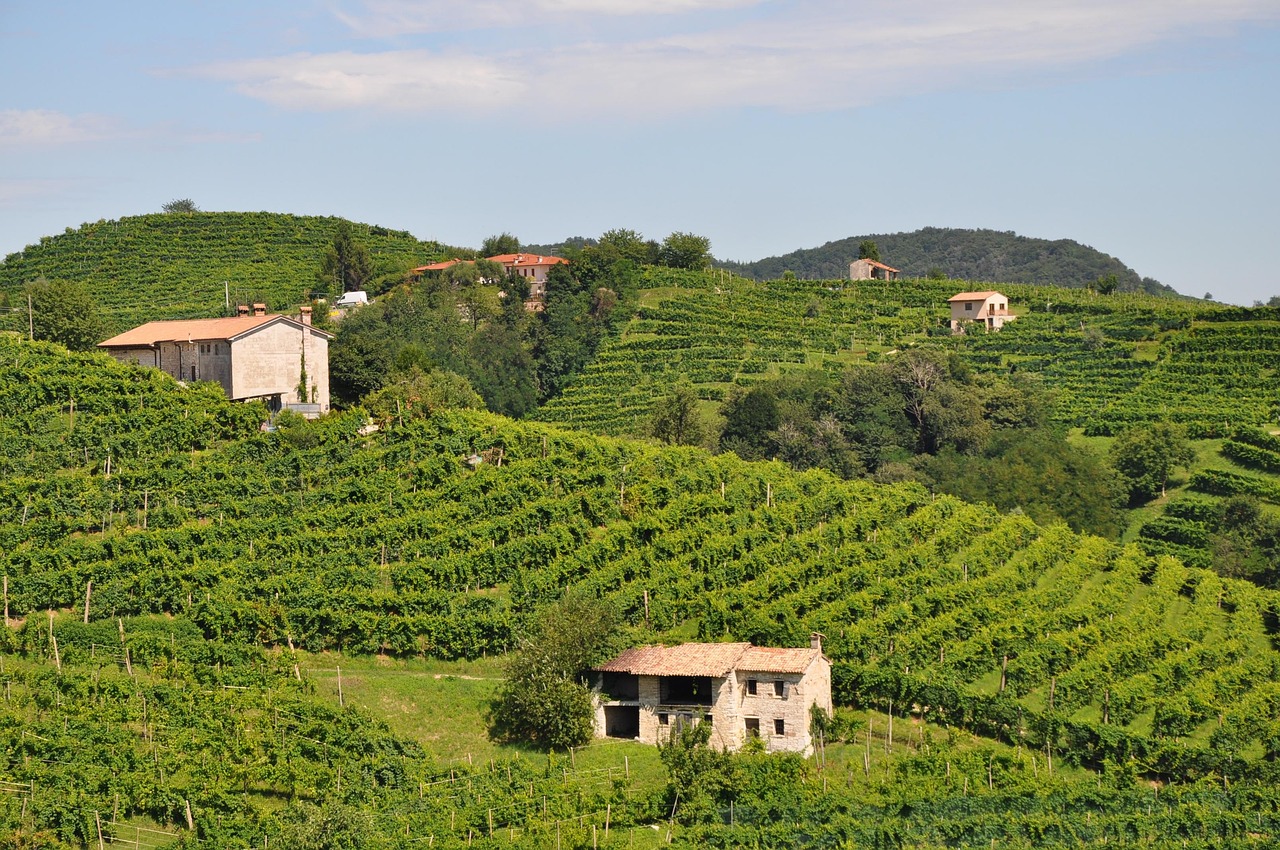
Many vineyards in this region sit on steep slopes — terrain so challenging that mechanized harvesters are useless. Instead, harvesting must be done by hand, cluster by cluster. This “heroic viticulture” (as many local producers call it) demands skill, strength, and respect for the land. As one producer in Foss Marai describes it: the steep slopes, narrow rows, and unpredictable weather make each harvest a labor of love.
Manual harvesting also means lower yields — but the grapes that make it into the presses tend to be more concentrated, with better flavor and aromatic potential. These grapes often go into wines labeled as “Rive” or higher-end DOCG bottlings, designed for quality and terroir expression rather than volume.
From vine to cellar — the quick journey after harvest
Once picked — and quickly too — the grapes are rushed to the cellar. Time matters: the longer grapes sit after harvest, the more they risk unwanted fermentation or oxidation. In the cellar, clusters are destemmed and gently pressed; the juice (must) rests cool to allow solids to drop, giving a clean base wine.
Then begins the first fermentation: yeast converts sugars to alcohol under controlled temperature (around 18 °C). For most Prosecco, this leads to the base wine. Once that’s stable, the wine may be clarified, before being sent to tank for the second (sparkling) fermentation.
Behind the tanks — precision, timing, care
Prosecco is made using the Charmat–Martinotti method, meaning bubbles are formed in large pressurized tanks (autoclaves) rather than in individual bottles. Yeast and sugar trigger a second fermentation; once complete and pressure is stable, the wine is filtered and bottled under pressure — preserving the sparkle.
What many don’t see: the repetitive checks, the temperature controls, the small sensory tastings, and the lab work. These invisible steps ensure that what ends up in your glass is clean, vibrant, and true to the character of Glera and its slopes.
Why this matters — wine is people, place and care
Drinking Prosecco isn’t just about enjoying bubbles. Every sip carries soil, slope, human touch, and time. The gentle hum of the tank, the rustle of leaves on a slope, the calloused hands of harvesters — it’s all part of a living story. When you know this, you don’t just drink Prosecco — you appreciate it.