If you lined up Prosecco, Champagne and Cava on a tasting table, the differences would hit you in stages: first in aroma, then texture, then finish. The three wines all sparkle, but they are different answers to the same question — how do we make bubbles express place and personality?
How the bubbles are made — the central technical split
The biggest practical difference is where the second fermentation takes place.
- Champagne and many high-end Cavas use the traditional (bottle) method: second fermentation happens in the bottle; the wine remains on lees (dead yeast) for extended periods. That contact creates bready, brioche, and toasty notes, plus very fine, persistent bead.
- Prosecco (most commonly) uses the Charmat/Martinotti tank method: second fermentation in large, pressurized tanks preserves primary fruit aromas and produces a frothier, fruit-forward profile.
This method choice shapes the wine’s voice: Champagne tends to speak of complexity and age, Prosecco of immediacy and fruit. Cava sits in between, often using the traditional method but with Spanish grape varieties and a different regional identity.
The palate differences
- Aroma: Champagne often shows toasted, autolytic notes (bread, biscuit) along with citrus and stone fruit. Prosecco’s nose leans more toward lively white fruit and floral notes. Cava can show a mix: fruit plus some chalky, lees-derived character depending on ageing.
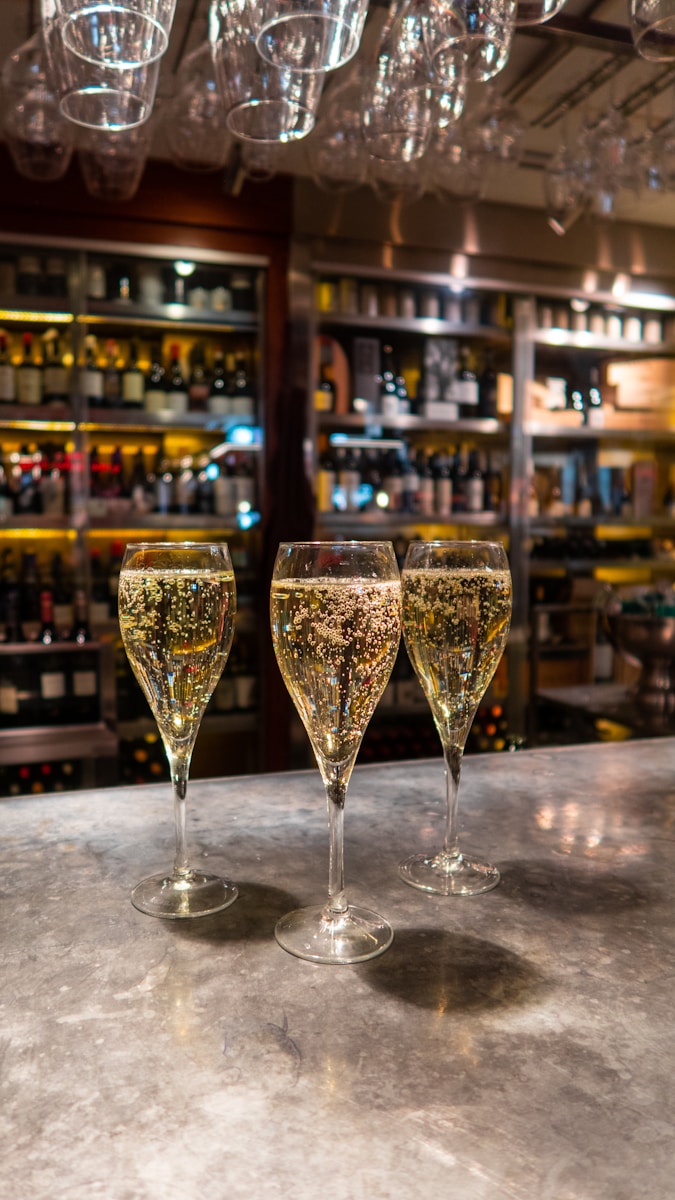
- Texture: Prosecco’s bubbles are sometimes described as larger and frothier (a lively mousse), whereas Champagne’s are typically finer and longer-lasting. That tactile difference significantly affects the drinking experience.
- Finish & complexity: Longer lees age and oak (sometimes) give Champagne more layers and aging potential; Prosecco is usually about immediate pleasure, though DOCG examples show surprising depth.
Choosing your moment
- Everyday cheer & cocktails: Prosecco. Great for Spritzes and casual toasts.
- Formal celebration & cellaring: Champagne. Complex and age-worthy.
- Food pairing & balanced vinosity: Cava or premium Prosecco depending on the dish. Both can pair beautifully — choose the wine that matches the food’s texture and intensity.
A tasting exercise to try
Buy three small bottles (or open three pours) blind. Focus on:
- Bubble texture (frothy vs fine),
- Primary aromas (fruit/flowers vs brioche),
- Length of finish (short vs lingering).
It’s a fun party trick and a great palate trainer. It also helps you understand why Prosecco is often the friendliest place to start a sparkling journey.
Read next: Head to Chapter II — “The Italian Terroir” — where we go from the broad differences to the very specific places that shape great Prosecco.