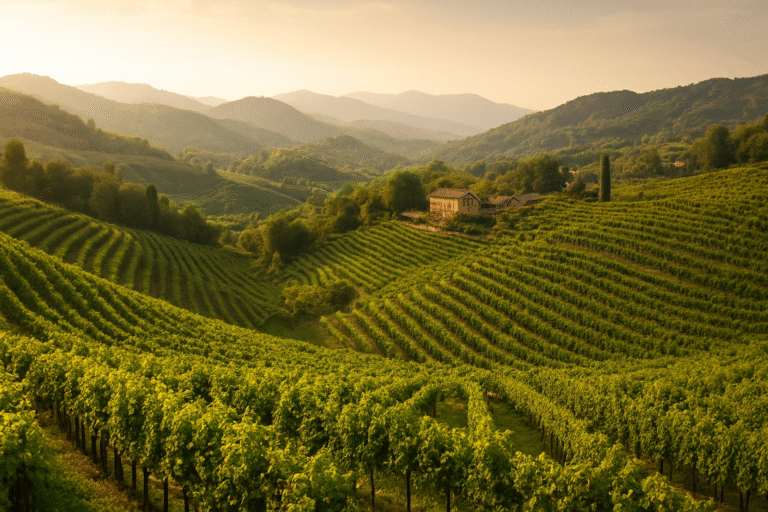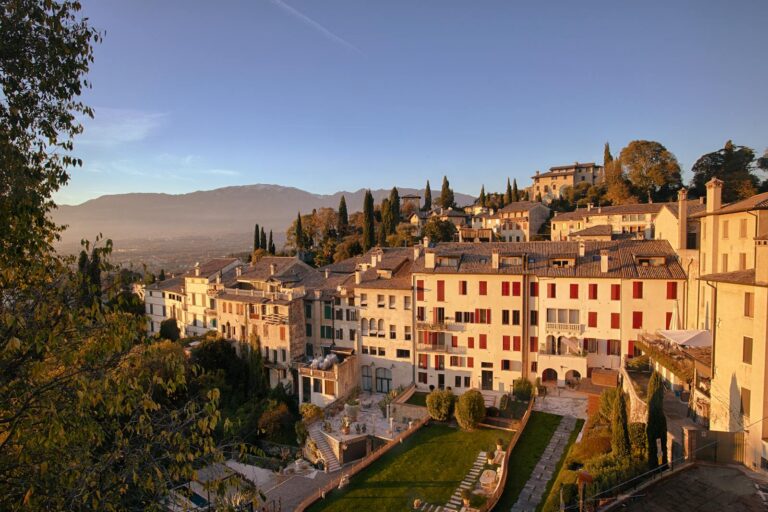
When people think of Prosecco, they often imagine hills. But most Prosecco actually comes from flatter, broader terrain — the vast Prosecco DOC zone that spans large parts of Veneto and Friuli-Venezia Giulia. It’s here where Prosecco’s accessibility and ubiquity find their roots.
A wine region built for scale
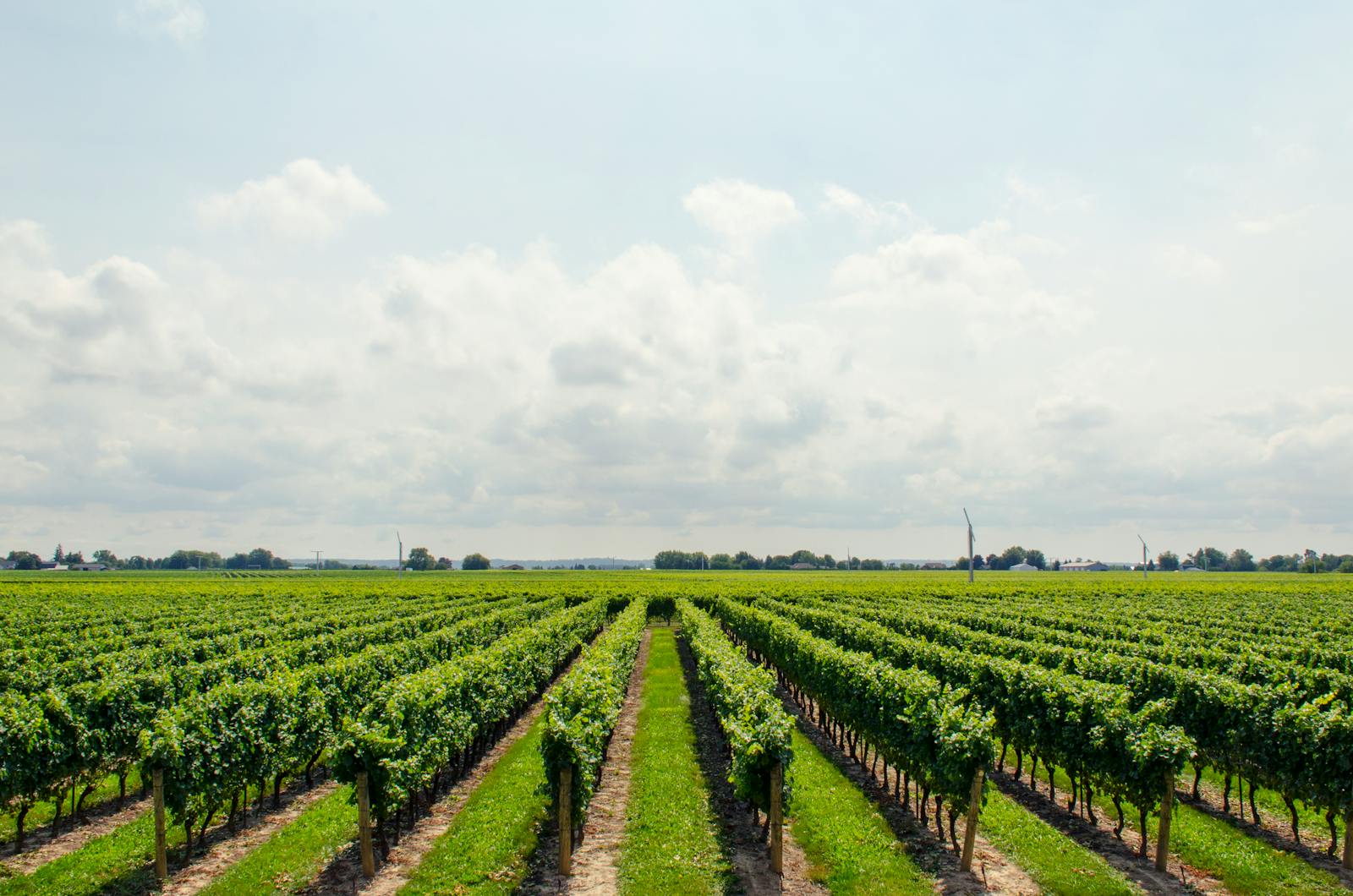
Unlike the steep vineyards of the DOCG hills, the Prosecco DOC area includes much more gently rolling terrain and valley floor. This allows for mechanized viticulture, which helps make Prosecco widely available and often more affordable. The DOC was expanded to these areas in the late 20th century to accommodate growing demand.
Terroir diversity — but with a lighter signature
Soil types across the DOC are more varied and often less extreme than in the DOCG hills. While some producers are exploring hillside plots in DOC, many vines are planted in more uniform terrain — contributing to a fresher, more fruit-forward expression of Glera. That said, there is variety: glacial deposits, clay, and mineral soils appear, but with less of the “cru” differentiation found in DOCG rive.
The climate in the DOC zone is generally milder and more stable. Thanks to lower elevation and flatter landscapes, grapes ripen more evenly, and growers can rely on more consistent yields. This is part of why Prosecco DOC is so commercially successful: it combines scale with flavor.
The role of the consortium
The Prosecco DOC Consortium plays a major role in maintaining standards and supporting producers across the region. This group helps regulate production, support terroir-focused producers, and protect the Prosecco name. This coordination helps small growers (especially on hills) compete alongside larger, more industrial operations.
How DOC wines taste
DOC Proseccos tend to lean toward bright fruit (apple, pear), floral aromas, and a crisp, clean finish. Many DOC wines are made for early consumption, designed to be cheerful, easy, and expressive rather than highly complex. That being said, some DOC producers are experimenting with hillside plots and more terroir-driven styles, bridging the gap between mass appeal and quality.
Why DOC matters in the Prosecco story
Without the DOC, Prosecco would likely remain a niche hill wine. DOC production made Prosecco a global phenomenon: accessible, versatile, and everywhere. But DOC’s scale also brings responsibility — and more and more winemakers are pushing for terroir recognition, sustainability, and style differentiation.
Read next: “Rive and Cartizze: The Grand Crus of Prosecco” — where terrain becomes identity, and quality becomes story.