If Prosecco were a person, it would be the kind of friend you discover early — simple, cheerful, and unpretentious — and then realize is quietly extraordinary. Its transformation from a regional curiosity to the world’s best-selling sparkling wine is a story of timing, branding, and a dash of cultural luck.
Humble roots, ambitious name
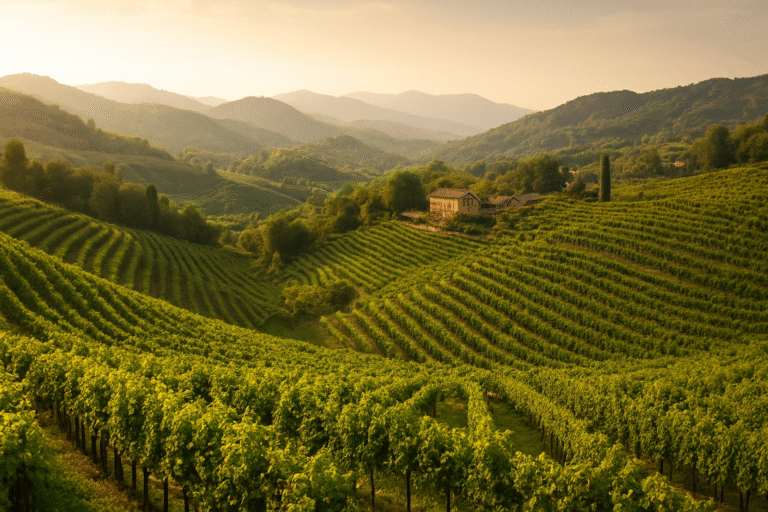
Prosecco’s story begins in the gentle hills and plains of northeastern Italy, particularly in Veneto and Friuli-Venezia Giulia. For generations, Glera (formerly called Prosecco) was grown locally and consumed within the region. But the shift began in earnest only in recent decades. A crucial turning point came in 2009, when the grape’s name was legally changed to Glera and the geographic denomination Prosecco was established. This rebranding allowed for stricter regulation and protection, while also paving the way for international growth.

A global marketing masterpiece
That name change was about more than compliance: it was strategic. As Forbes explains, the grape’s renaming and the establishment of a geographic appellation created a strong identity for Prosecco, enabling it to scale globally while protecting its roots. The result? Prosecco didn’t just become a wine — it became a brand.
An explosion of demand
Prosecco’s popularity exploded in the 2010s. As demand grew, production surged: the number of hectares planted expanded dramatically, while production structures evolved from small family estates to cooperatives and major brands. A recent study in the Journal of Rural Studies notes that Prosecco is now the highest-selling PDO (Protected Designation of Origin) wine in Italy, with a production area that ballooned to about 25,000 hectares — and involving more than 11,000 families.
In 2019, the Prosecco Hills of Conegliano and Valdobbiadene were awarded UNESCO World Heritage status for their unique cultural landscape — steep ridges, terrace vineyards, small villages, and centuries of viticulture. That recognition wasn’t just symbolic: it affirmed the region’s historical and human value, not only as a wine-producing area but as a living cultural landscape shaped by generations of people.
The model behind its success
Part of Prosecco’s charm — and its business power — lies in its democratization. Thanks to the Charmat (tank) method, producers can deliver a consistent, fresh, fruit-forward wine at a wide range of price points. But the story isn’t just about volume: DOCG producers have leaned into terroir, identity, and sustainable practices to push Prosecco beyond “cheap fizz.” There’s a growing movement in the DOCG hills to emphasize Rive, soils, and single-vineyard expression.
Why this matters for culture
Prosecco’s rise isn’t only commercial — it’s cultural. It became the soundtrack for brunches, the staple of Spritz nights, the easy-to-share bottle at gatherings. Its success reflects a global craving not just for sparkling wine, but for conviviality, lightness, and a touch of Italian spirit. For many, Prosecco is more than a drink — it’s a lifestyle.
Read next: “Aperitivo Culture: The Ritual of Relaxation” — how Prosecco became inseparable from the Italian pre-dinner moment.