If Glera is the musical score, the Charmat (or Martinotti) method is the instrument that plays it. It’s the mechanical but elegant process that gives most Prosecco its hallmark bright fruit and lively bubbles — and it’s often misunderstood as “cheap” technology. In reality, the Charmat method can produce wines of finesse, especially when the base wines are well-made and the tanks are treated like precision instruments.
Origins and inventors
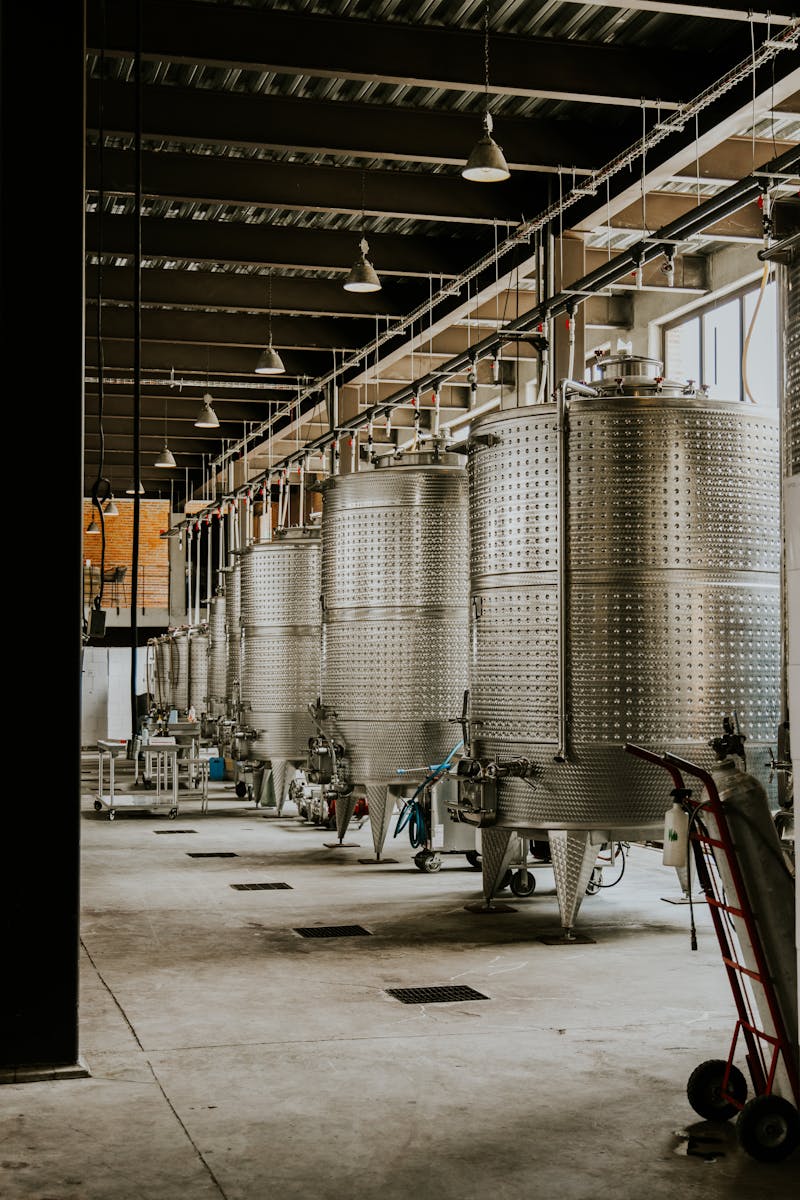
The method most associated with Prosecco is often called “Charmat,” after Italian inventor Federico Martinotti’s French collaborator, Eugene Charmat, who improved and popularized the technique in the early 20th century. In Italy, the term Martinotti is sometimes used interchangeably, recognizing Martinotti’s original innovation of carrying out the second fermentation in a pressurized tank. That tank — the autoclave — is where yeast and sugar are added to the base wine to create CO₂, which dissolves into the wine and produces bubbles.
The process, step by step
Imagine the cellar as a sort of mechanical kitchen where the first fermentation produces a delicate, still base wine. This wine is then cooled, clarified, and sometimes blended for consistency and balance. When the winemaker is happy, the base wine is transferred into a sealed, pressurized tank (the autoclave). There, yeast and a precise amount of sugar are added — this kickstarts a second fermentation. The yeast eats the sugar and breathes out alcohol and CO₂, but in the sealed tank the CO₂ can’t escape, so it dissolves into the wine. After the fermentation finishes and the wine reaches the desired pressure, it’s chilled, filtered, and bottled under pressure, preserving the CO₂. The result: a wine that emphasizes primary fruit aromas and a lively mousse.
Why the tank method suits Prosecco’s personality
Tank fermentation is efficient — it speeds up production and allows winemakers to preserve fresh, floral aromas. That’s ideal for Glera, where primary fruit notes are desirable. Moreover, the autoclave can be used to control fermentation parameters precisely, allowing producers to craft consistent, bright, and aromatic wines at scale. While some see the method as industrial, the best Proseccos treat the tank as a fine tool for expressing varietal character.
Quality within the tank: nuance matters
Not all Charmat-made wines are equal. Tank design (vertical vs horizontal), fermentation temperature, yeast strain selection, and the quality of the base wine all matter. Top producers in DOCG who use Charmat aim for slow secondary fermentations at cool temperatures to produce delicate, fine bubbles and to preserve aromatic complexity. Some also add a brief period of lees contact to add mouthfeel and subtle depth. It’s not just about speed; it’s about control and subtlety.
Pressure and bubbles: technical notes with sensory consequences
Pressure (measured in bars or kilopascals) determines bubble size and feel. Prosecco’s typical pressure is lower than many traditional method wines, which contributes to a frothier, vivacious mousse rather than long, fine bead. Producers manipulate pressure, and the final filtration to get the mouthfeel they desire. The outcome is tactile — the bubbles feel lively, the palate sings with fruit, and the finish tends to be bright.
Tank method vs bottle method: not a contest, but a difference
Traditionalists may prize the bottle-fermented method for complexity and aging potential; the tank method favors immediacy and floral freshness. But recent innovations — long Charmat aging on lees, single-vineyard base wines, and hybrid approaches — are blurring boundaries. Some DOCG producers argue that Charmat is part of Prosecco’s identity and can express terroir beautifully when used thoughtfully. The debate is healthy and it’s pushing producers to refine their approaches.
Quick technical details — typical steps & timings
• Primary fermentation: weeks (to make base wine).
• Secondary (Charmat) fermentation: often a few weeks to months depending on style.
• Bottle under pressure: immediate after tank conditioning.
Read next: “Styles of Prosecco — how sweetness and fizz shape tasting and pairing.”