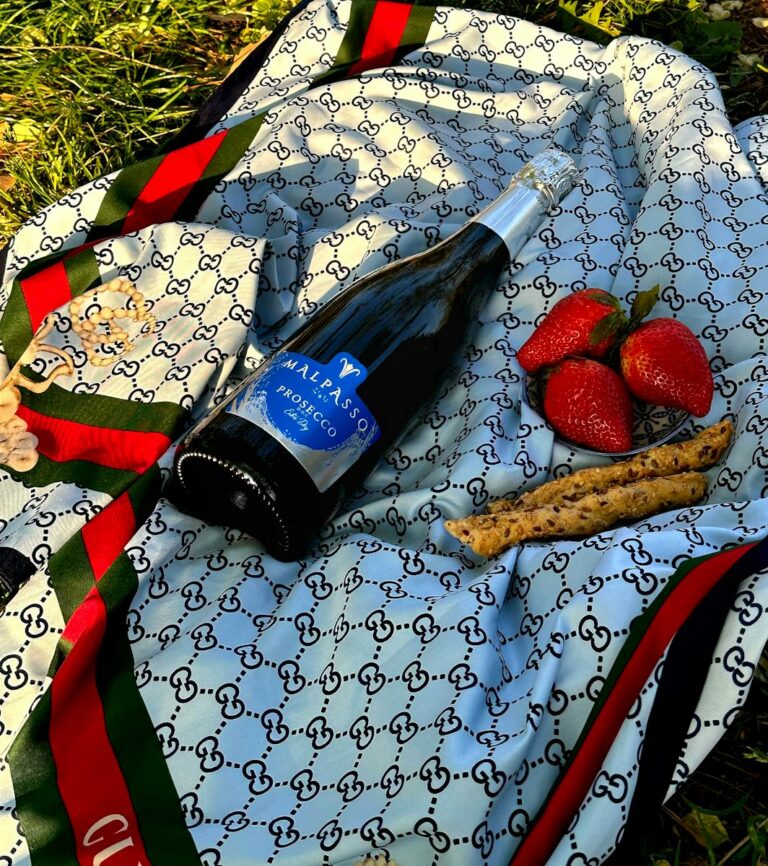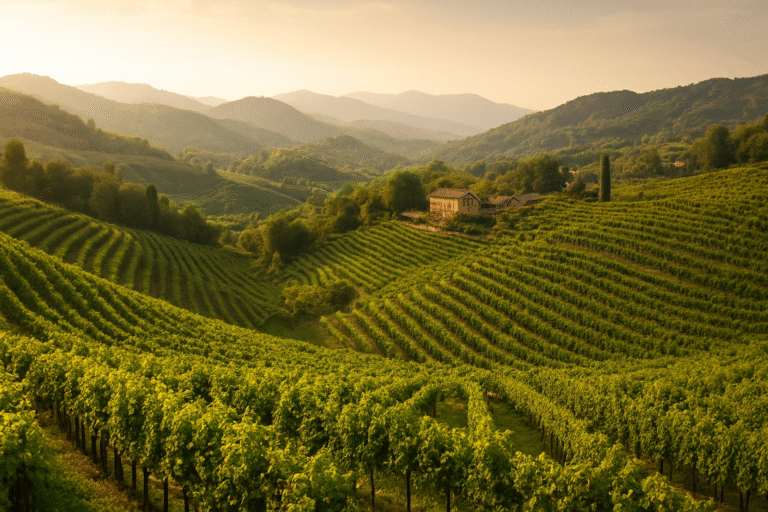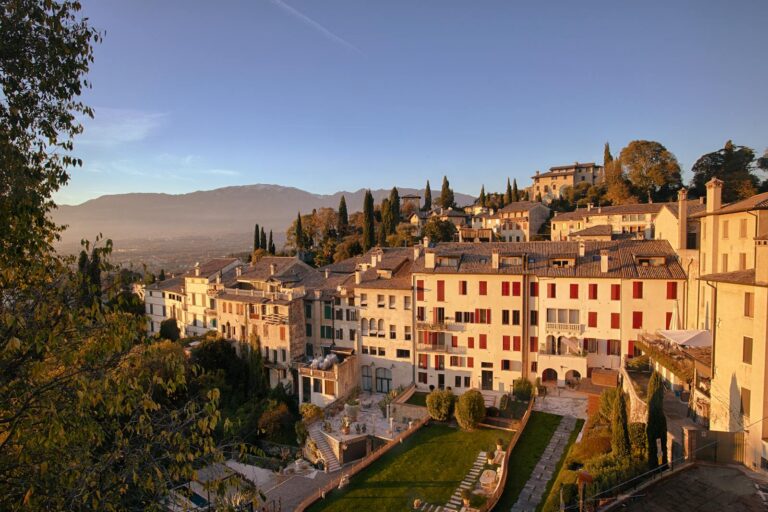
There is no Prosecco without place. To truly feel Prosecco is to walk among its steep vineyards, trace the contour of its terraces, and sip a glass in a sun-drenched village. Visiting the Prosecco hills is not just a wine trip — it’s a journey through landscape, history, and heart.
The UNESCO hills — a living mosaic
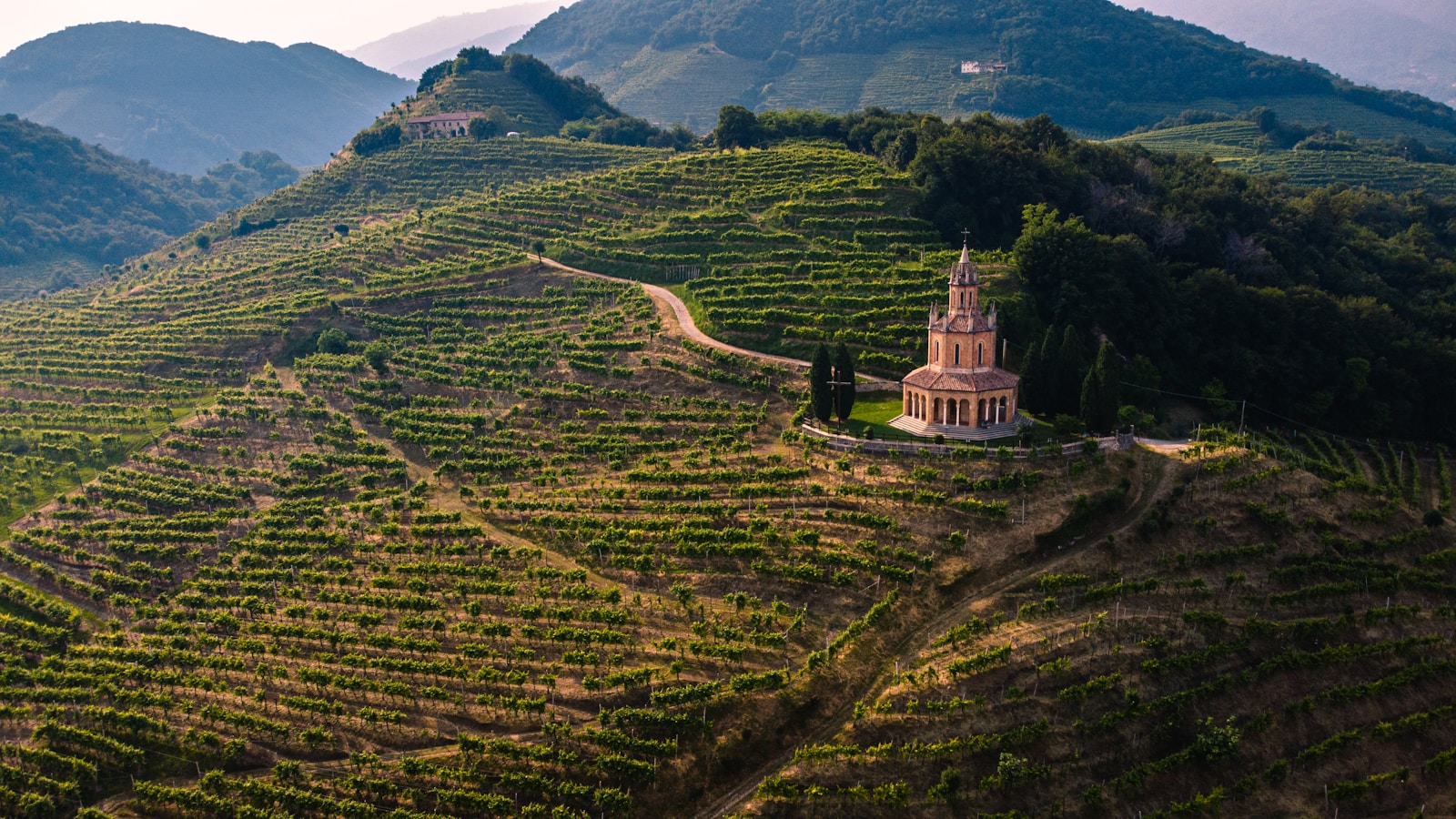
The hills of Conegliano and Valdobbiadene, recognized by UNESCO in 2019, are not just vineyards — they are a cultural landscape shaped by centuries of human hand and natural geology. These hogback hills are sculpted into small terraced plots known as ciglioni, where vine rows run perpendicular to the slope, creating an iconic checkerboard mosaic.
According to the Prosecco Speciale UNESCO guide, this rugged terrain — maintained by manual labor and historical training methods — is now protected not only for its beauty but as a symbol of “heroic agriculture.”
Must-see itineraries & experiences
If you’re planning a trip, the official Prosecco tourism site offers wine-tourism itineraries that merge art, nature, and history. You can perhaps wind up into the hills through the Prosecco Wine Route (Strada del Prosecco). Starting in Conegliano this is a scenic road that connects key wine estates, lookout points, and small historic towns. A great way to experience vineyards tucked into steep hillsides — a deeply authentic way to connect with the land.
In 2025, the Italian Touring Club released an in-depth guide dedicated to the Prosecco Hills, highlighting not just enogastronomy but local craftsmanship, scenic villages, and sustainable tourism. This is more than wine-tasting — it’s cultural immersion.
Wine tourism is booming
Prosecco tourism isn’t a niche — it’s exploding. According to Meininger’s, overnight stays in the Prosecco hill region increased by roughly 400% recently, as Airbnb listings proliferated under the “Wine Regions” category. The hills now attract wine lovers, Instagrammers, hikers, and slow travelers who want to taste, dwell, and wander.
How to plan your visit
- Where to stay: Agriturismi (farm stays), boutique B&Bs, or small guesthouses perched among vineyards give you the full hill-country feel.
- Best times: Late spring (May–June) and early fall (September) are ideal — mild weather, vineyard bloom or harvest vibes, and fewer crowds.
- Must experience: Vineyard tours, wine tastings in family-run cellars, guided walks or bike tours along ridge trails, and picnic lunches among the vines. Some towns also host Prosecco-themed cultural events.
- Lookouts: There are several panoramic points where you can taste a glass with a view — often as magical as any cellar.
- Local flavors: Pair your tastings with regional specialties: soft cheeses, salumi, local olive oil, and seasonal fruit. A stop in Cison di Valmarino or Follina gives a perfect mix of history, view, and hospitality.
Travel tip: In warmer months, plan your visit in the early morning or late afternoon — that’s when light makes the hills glow, and wineries are more likely to offer relaxed, unhurried tastings.
Read next: “Italy’s Sparkling Personality” — reflecting on how Prosecco doesn’t just taste like Italy, it feels like it.